His Moment Didn't Start When the Lights Went On
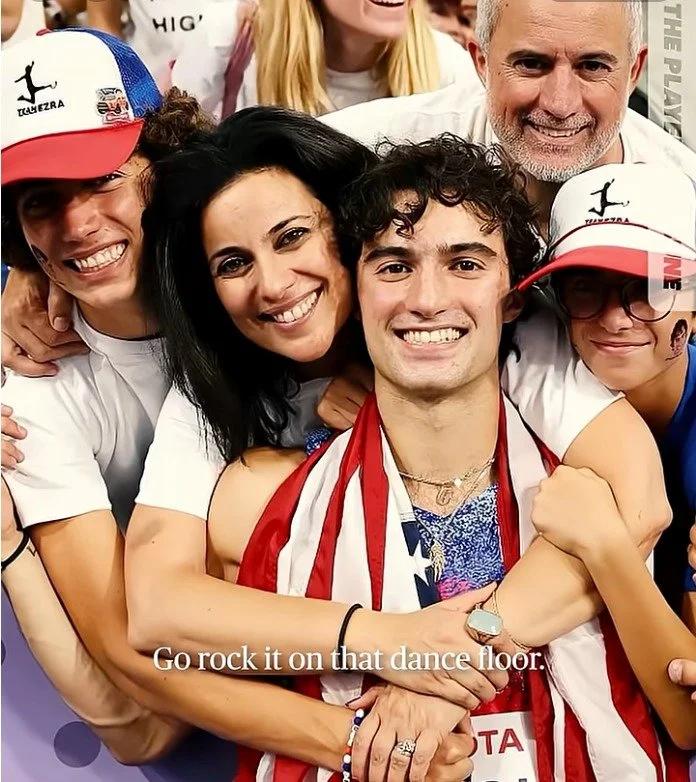
Still from The Players’ Tribune
On Tuesday night, Ezra Frech won Dancing with the Stars. In the finale, his prosthetic came off mid-dance. He kept dancing, and he won. He is the first amputee to win in the show's history, and he was already a two-time Paralympic gold medalist.
Millions watched him shine under the lights. But his moment didn't start there. It started with his parents: how they responded the day he was born with a difference, and what they did about it. That made the difference.
The Players' Tribune shared a message his mom recorded for him. "Everything you've ever dreamt of with normalizing disability and changing perceptions is happening," she tells him. "Go rock it on that dance floor."
Listen to Ezra’s mom leaving him a voicemail. Get the tissues.
"It just is"
Ezra was born in 2005 without a left knee, without a left fibula, and with one finger on his left hand. Within 24 hours, doctors told his parents his leg would need to be amputated.
His mom, Bahar Soomekh, remembers something else first: "I saw his face and he was the most beautiful child."
To this day, nobody knows why it happened. "It doesn't matter," his parents said years later. "It just doesn't matter."
That is the starting point. A difference is not good or bad. It is what it is. It just is.
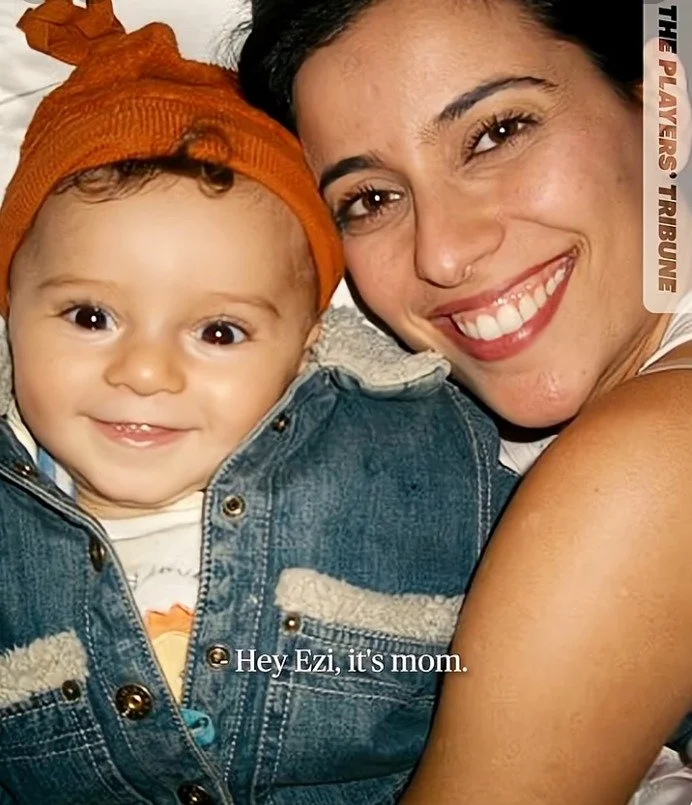
Still from The Players’ Tribune
"We named him Ezra"
"Ezra means the teacher, the helper," Bahar says. "And we said, you, child, you're going to teach this world about how rich and beautiful it is in its diversity and its differences."
"I believe our names have power, and he's lived up to that name."
From battle to curiosity
It wasn't easy at first. When Ezra was less than a month old, a restaurant owner lifted him up, the blanket fell, and the room gasped. Bahar ran outside and sobbed. For a while she was "ready for a battle," glaring at anyone who stared.
Then she met a man missing an arm who told her staring is just what people do. People are curious. Most mean no harm. The family shifted gears.
Instead of anger, an invitation: "Hey, it looks like you're curious about Ezra. Come on over, let me tell you a story." Ezra learned it from them. Soon he was the one saying, "Are you curious about my leg? Come on over."
They gave him the words
This is the part I want every Schneider Speech parent to hear.
With a child development specialist, Bahar and Ezra's dad, Clayton Frech, wrote a short script about Ezra's leg. They used it everywhere, until Ezra could tell his story himself. Every teacher, counselor and coach got a copy. His prosthetic was his "helper leg."
Clayton calls it "a language bubble." Ezra heard the same words from his parents, his teachers and his coaches, always in the same matter-of-fact tone: this is just a thing, no big deal. When other adults slipped into pity, the Frechs stepped in: "We don't choose to view it that way."
Bahar explains why it matters: "If you can share who you are, what your story is, it reinforces your self-confidence and pride in who you are, so that if you do choose to share it, you have the words and you can say it with your head up high."
That is the heart of what we do with kids who stutter. We help them own their story and find their words, so they can speak with their head up high.
"Just one of the guys"
It was still hard. At four, Ezra saw himself in the mirror and cried, "Who looks like this, mom? Who?" Later he described being stared at like "a zoo animal."
His parents put him on the same teams as everyone else. They also made sure he spent time with other kids and mentors with disabilities.
Sports changed how he saw himself. "When I was playing a sport, I wasn't thinking about the fact that I was the only person in my school with a disability. I was just one of the guys."
His mom's charge to him: walk into every room "and look and stare down everybody in that room. You let them know you arrived."
Don't let it define us. Let it refine us.
I say this to families all the time. Ezra's difference never defined him. It refined him.
At nine, in front of 17,000 kids, he put it his own way: "Kids whisper and underestimate me, but that just makes me work harder. And I know their words don't have a leg to stand on. As for me, I have like 15 of them."
And: "Everyone faces challenges and has differences. Mine just happen to be visible."
Some differences are seen. Some, like stuttering, are heard. The playbook is the same.
What you can take home
Say it plainly. Matter-of-fact. It just is.
Give your child their story. Short, true, in words they can say themselves.
Get everyone on the same words. Home, school, coaches.
Choose curiosity over battle. Most people who stare or ask are just curious.
Keep them in the game. With everyone, and with others who share their difference.
Watch how their soul is doing. In Clayton's words, the parent's job is "to sort of monitor how the soul is doing of our children."
Ezra says he was put on this earth "to normalize disability, be an example of what's possible as an amputee, and inspire the world." His parents gave him the words to do it.
His moment on the biggest stage started long before the lights went on. Your child's can too.
If your child stutters and you want help building their story and their words, that is the work we do every day.
Watch
We Day Chicago 2015: Ezra Frech speech with Magic Johnson (Ezra's channel). Ezra at 9: "I just don't quit."
This Kid Is Inspirational Beyond His Years (CBS LA, 2017). Ezra at 12, and his parents on the day he was born.
SC Featured: Ezra (ESPN, 2025). "Just one of the guys."
Raising a Paralympic Gold Medalist with Bahar Soomekh and Clayton Frech (We Are Brave Together podcast, 2024). The parenting playbook, in their words.
My mom and I answering some questions before dedication night (Ezra's Short, Oct 2026).
Hey Ezi, it's mom (The Players' Tribune on X, Nov 2026). His mom's message to him.